
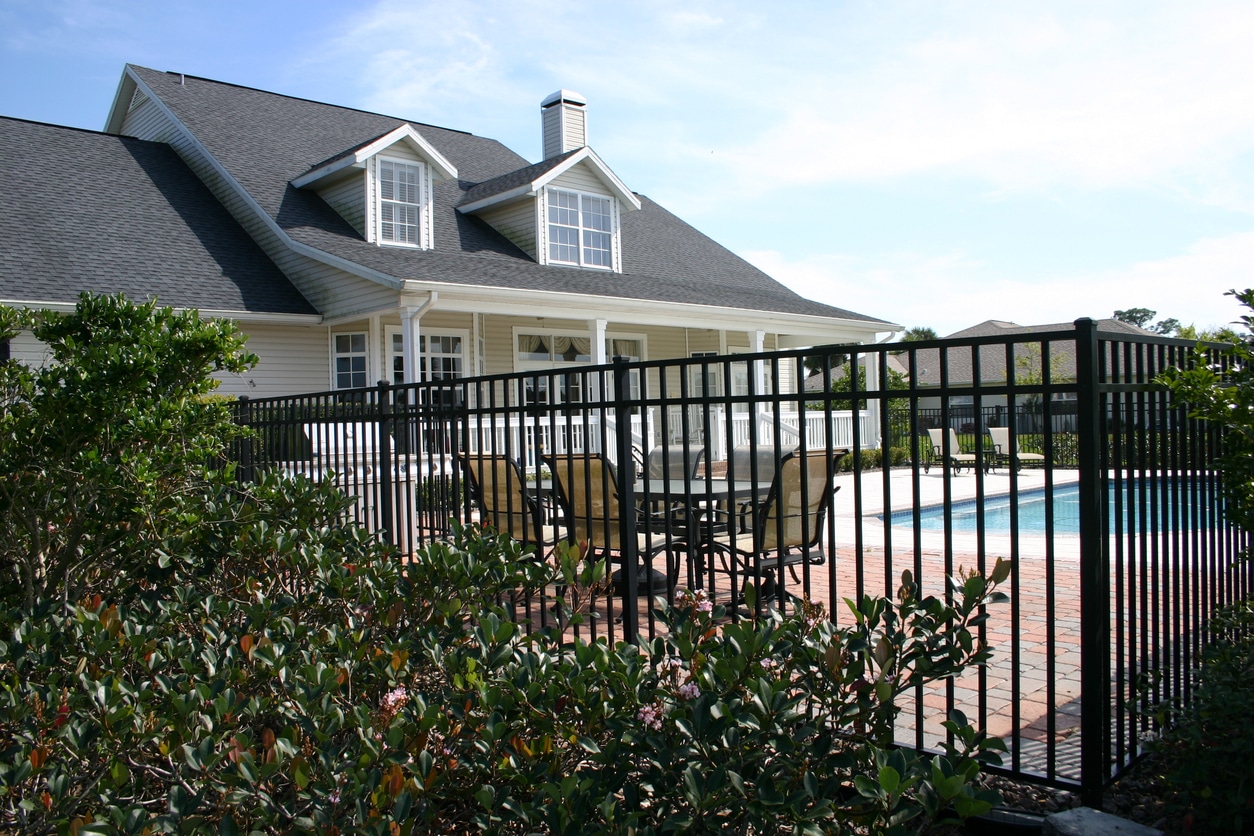
With several fencing materials and styles available, many homeowners wonder which option works best for their property, pool layout, local regulations, and long-term maintenance goals. At North Indy Fence, Deck & Rail, we provide professional fence, gate, and railing installation services throughout the Indianapolis area, helping homeowners choose fencing solutions that balance safety, durability, and curb appeal.
Aluminum vs. Vinyl: Which Pool Fence Material Is Better?
Aluminum fencing is the more popular choice for pool areas because it maintains clear sightlines into the pool from other parts of the yard — a meaningful safety advantage for households with children. Vinyl privacy fencing is the better fit for homeowners who prioritize seclusion, want to limit visibility from neighboring properties, or are building a more enclosed outdoor living space around the pool.
What Are the Pool Fence Requirements in Indiana?
- Pool fences typically must be at least 48 inches tall
- Fence openings should be small enough that a 4-inch sphere cannot pass through
- Gates must be self-closing and self-latching
- Latches should be located on the pool side of the gate and out of reach of young children
- Gates must open away from the pool
- HOA communities may have additional requirements regarding fence style, color, and material
Aluminum Fencing for Pools
Because pool environments involve constant moisture exposure, rust resistance is a critical factor. Aluminum fencing naturally resists corrosion without painting, sealing, or staining, making it one of the most practical long-term choices for poolside installation.
The open design of aluminum fencing also allows homeowners and parents to maintain clear sightlines into the pool area from the yard, patio, or home — something solid privacy fencing does not provide.
North Indy Fence installs aluminum fencing systems designed to complement pools, patios, and outdoor living areas throughout Noblesville, Westfield, Indianapolis, Zionsville, Carmel, Fishers, and surrounding Indiana communities.
Vinyl Privacy Fencing for Pools
Vinyl fencing shares many of the same low-maintenance advantages as aluminum — it does not require painting, staining, or sealing and holds up well against moisture and changing weather conditions. Many homeowners pair vinyl privacy fencing with outdoor kitchens, covered patios, and landscaping to create a fully enclosed backyard living area centered around the pool.
What to Look for in a Pool Gate
- Self-closing hinges that return the gate to a closed position automatically
- Self-latching hardware that secures the gate without manual locking
- Pool-side latch placement positioned high enough to prevent young children from reaching it
- Outward swing so the gate opens away from the pool
- Locking options for added security when the pool is not in use
How Much Does Pool Fencing Cost in Indiana?
Why Professional Pool Fence Installation Matters
Professional installation ensures the fence meets local code requirements, performs as intended, and looks clean and finished from every angle.
What type of fence is best for pools?
Aluminum fencing is the most popular choice for pool areas because it provides durability, visibility, rust resistance, and low maintenance. Vinyl privacy fencing is the better option for homeowners prioritizing backyard privacy and seclusion. The best fencing material often depends on safety goals, maintenance preferences, local code requirements, and the overall style of the outdoor space.
How tall does a pool fence need to be in Indiana?
Most Indiana municipalities require pool fences to be at least 48 inches tall. Homeowners should verify current requirements with their local building department before installation. Local codes may also include additional regulations involving gate hardware, spacing between pickets, and latch placement for safety compliance.
Does a pool fence gate need to be self-closing?
Yes. Pool fence gates are generally required to be self-closing and self-latching, with the latch located on the pool side of the gate and positioned out of reach of young children. These safety features help reduce unauthorized pool access and improve overall backyard safety. Proper gate installation is an important part of meeting most residential pool code requirements.
Is aluminum fencing good for pool areas?
Yes. Aluminum fencing is one of the most commonly used pool fence materials because it resists rust, requires minimal maintenance, and maintains open sightlines into the pool area — which is an important safety advantage. Aluminum fencing also performs well in changing weather conditions and is available in a wide range of styles and finishes to complement different outdoor spaces.
Is vinyl fencing a good choice for pools?
Vinyl fencing is a strong option for pool areas, particularly for homeowners who want privacy. It is moisture-resistant, durable, and requires no painting or staining over time. Vinyl fencing may also help reduce visibility from neighboring properties while creating a cleaner and more secluded backyard environment.
